
Powder pigments for plastisol
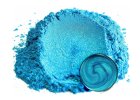
Powder pigments for plastisol are dry colour and effect additives for soft baits. Choose for the intended pearl, fluorescence, afterglow or colour shift and verified compatibility. Do not confuse them with powder coatings for fishing leads.


Product sorting
Brands
List of products





Dry pigment is different from lead powder paint
Pigment is dispersed in the material it colours or gives an optical effect. A powder coating for metal is a complete coating system with its own binder. A similar powder form or shade name does not establish the same use. For soft baits choose a product suitable for the specific plastisol.
Choose the effect before the recipe: pearl is a reflection, fluo works under suitable illumination, glow continues after charging, and colorshift changes the perceived colour with angle. These functions are not interchangeable.
Finding the right pigment family
For a subtle or stronger continuous reflection, see pearlescent pigments. Ghost focuses on interference reflections, Neon UV on fluorescent colour and Glow on afterglow after charging. Further families include Pastel, Opulent, hue series, Colorshift and Ultrashift. Range names are not a universal standard; the shade’s card defines the specific function.
Dosage, dispersion and temperature limit
Measure powder accurately and disperse it according to the pigment and base-material instructions. Do not transfer epoxy or coating recipes to plastisol. Dosage, processing and heat resistance differ between pigments. Increasing concentration can change translucency and workability as well as colour strength.
Avoid unnecessary airborne dust and use the protection specified in the safety data sheet. Make a cooled sample, check thickness, background and light, then record the recipe. Liquid colours and glitter are separate groups; find equipment in Soft bait production.
Frequently asked questions (FAQ)
Is pigment the same as glitter?
No. Pigment colours the material or adds a dispersed optical effect. Glitter creates separate visible flashes; particle size also affects the result.
Can every pigment be used in every plastisol?
Not automatically. Check suitability for the specific material, heat limit and processing instructions. An epoxy or cosmetic application alone does not establish that compatibility.
How much pigment should I use?
Follow the recommendation for the specific shade and make a small test casting. There is no universal ratio for every pigment and base material.