
Liquid Colours for Plastisol
Liquid colours for plastisol are concentrated pigment pastes for colouring hot, clear plastisol when making soft baits. They let you build single-colour bodies, contrasting laminates, translucent layers and light-reactive or reflective accents for a specific recipe. Choose standard colours for the core palette, fluo colours and light-effect additives, liquid metallic colours or special shades for transparent, natural-looking and recipe-led directions. Always homogenise the colour first, dose it in small increments and verify the result on a cooled cast in the bait’s actual thickness.
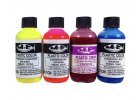
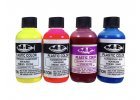
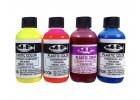
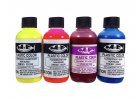


Product sorting
Brands
List of products





Liquid colours for plastisol are the primary group of colouring additives used to construct soft-bait recipes. They can create a single-colour body, separate the back and belly, build a contrasting laminate, tint a transparent layer or add a strong colour accent. These are concentrated liquid-to-paste colouring additives mixed into base plastisol, not ready-to-use liquid rubber, loose glitter, dry pigment or a surface airbrush colour.
This parent category is the guide to the complete liquid colour palette. Begin by defining what the finished bait needs: a clean basic shade, fluorescent colour or light-reactive function, metallic or pearlescent sheen, or a transparent, earthy or otherwise specific recipe tone. Then choose the corresponding range and individual colour.
Liquid colours and powder pigments are two separate material groups. A liquid colour is a prepared pigment paste that is homogenised before use and then dosed into plastisol. A powder pigment is a dry additive with its own weighing, dispersion and safe-handling requirements. A similar shade name therefore does not mean an identical recipe or dosing at a 1:1 ratio.
Standard colours – the core palette for full bodies, layers, tonal adjustment and mixing custom shades.
Fluo colours and light-effect additives – fluorescent shades, transparent fluo colours, UV Activator and phosphorescent Glow in the Dark.
Liquid metallic colours – metallic and pearlescent shades for continuous sheen; Ghost and Interference effects are more dependent on the background and viewing angle.
Special colours – transparent, natural-looking, Motor Oil and other recipe-led shades beyond the core palette.
Neither the range name nor the concentrate in the bottle is an exact swatch of a finished bait. Once the colour is mixed into plastisol, the result changes with dose, base clarity, casting thickness, neighbouring layers, other additives and lighting. A thin tail may look considerably lighter or more translucent than a solid body made from the same mix. The decisive reference is a cooled test cast in the actual intended thickness.
Inspect transparent, metallic, interference and light-reactive effects against both light and dark backgrounds. Compare fluo colours and UV Activator under the same suitable UV source. Illuminate Glow in the Dark first and then assess it in darkness. One testing method is not sufficient for every colour and effect group.
Always build the dose from a smaller quantity upwards. More colour can be added, but concentrate that has already been mixed in cannot be removed. A higher dose may strengthen the shade while changing transparency, covering a subtle effect or reducing the visibility of glitter. Stir after every addition and prepare a new cooled sample.
Pigment components may settle during storage. Before every use, shake the bottle thoroughly or stir its contents until colour and consistency are even. Homogenising can be made easier with clean, completely dry stainless-steel mixing balls: use 2 balls in a 50 g bottle and 2–3 balls in a 250 g bottle. Mixing balls are not included with the colour.
First stir the base plastisol slowly from the bottom and heat it according to the manufacturer’s instructions until it reaches a clear working state. Add colours, pigments and glitter only after the plastisol is hot. This sequence does not apply to every functional additive: hardeners, softeners or stabilisers may require a different process, so always follow the instructions for the specific product.
After adding homogenised colour, stir the mixture calmly and thoroughly without whipping unnecessary air into it. Make a cooled sample from a drop or small test cast. The finished intensity and clarity of a colour cannot be assessed reliably in cold, milky plastisol before heating.
There is no universal number of drops per 100 g of plastisol. Drop size depends on the dosing tip, while the finished appearance also depends on the plastisol, shade, bait thickness, number of layers and other additives. For repeatable production, record the weight of plastisol, the amount of every colour, the order of additions and the construction of the cast.
Liquid colours can be combined, but build custom shades in small test batches. Do not treat a range name as an automatic property: Special need not be metallic, Motor Oil need not change with the viewing angle, and UV Activator is not Glow in the Dark. Judge each function from the individual product description.
Colour, metallic effect and glitter perform different jobs within a recipe. A liquid colour establishes the base shade or optical character of the plastisol. Glitter remains visible as separate particles and points of flash. Establish the base colour and required effect first, then add glitter suitable for plastisol working temperatures.
When working with hot plastisol, wear safety glasses, heat-resistant gloves, long clothing and closed footwear. Work on a stable, heat-resistant surface with effective ventilation. Keep containers and tools clean and completely dry, avoid overheating the mixture and follow the product label, Safety Data Sheet and manufacturer’s instructions.
Frequently asked questions – liquid colours for plastisol
How do I choose the right type of liquid colour?
Choose Standard for the core palette, Fluo for fluorescent shades and light-effect additives, Metallic for metallic, pearlescent or interference sheen, and Special for transparent, natural-looking, Motor Oil and other recipe-led tones.
What is the difference between liquid colour and powder pigment?
Liquid colour is a pigment paste designed to be homogenised and dosed into plastisol. Powder pigment is a dry additive with its own measuring, dispersion and safe-handling requirements. A recipe cannot be transferred automatically between them at a 1:1 ratio.
When should liquid colour be added to plastisol?
Add it only after the plastisol is hot and has reached a clear working state. Homogenise the colour first, dose it in small increments and stir thoroughly after every addition. Functional additives may require a different process, so always read their instructions.
How much colour should I use per 100 g of plastisol?
There is no single universal dose. The result depends on the colour, plastisol, dosing tip, bait thickness and other components. Begin with a small quantity, check cooled samples and record the recipe that works.
Why does the finished bait not look like the colour in the bottle?
The bottle contains concentrated pigment paste. Once dispersed in plastisol, its appearance changes with dose, base clarity, casting thickness, neighbouring layers and light. A cooled test cast provides a much more reliable reference.
Can liquid colours be mixed together?
Yes, but prepare custom shades in a small test batch first. Record every addition and verify the mix in a real cast; a small amount of dark or saturated colour can change the final shade quickly.
When should glitter be added to the mix?
Establish the base colour and any UV, fluo, metallic or phosphorescent property first, then add the glitter. Test the complete combination because the particles may complement, shift or partly cover the original colour or effect.
→ Find the complete process, materials, moulds and workshop equipment in Soft Bait Making.