
Saltwater lines
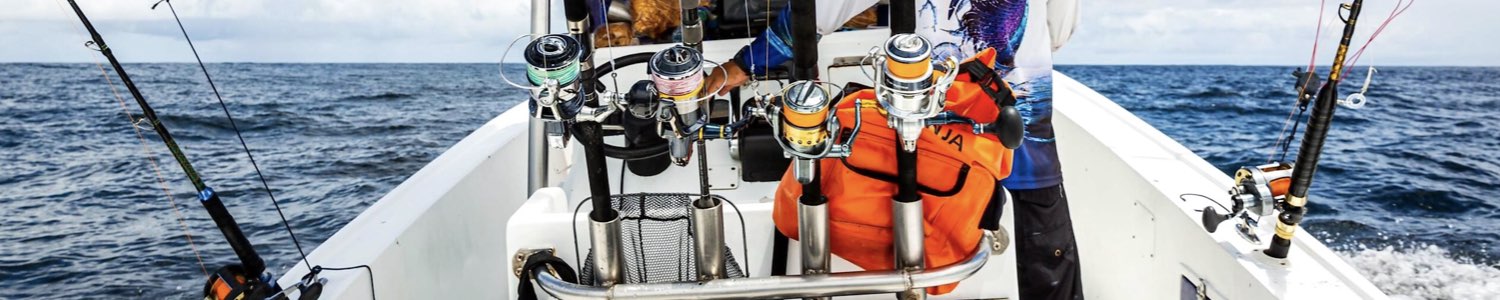
Saltwater fishing lines are not just about diameter and breaking strain. In the Lines category, you will find braided lines, fluorocarbon leader and monofilament for Norway and other saltwater use — from main lines to leader materials for lighter and heavier setups.


Product sorting
Brands
List of products




Saltwater fishing lines are one of the most important parts of the whole setup. At sea, they often make the difference exactly when there is no room for a weak point — in deeper water, stronger current, harder takes and longer fights. That is why it makes no sense to choose lines only by one number on the spool. What matters is the role of the material in the full setup and how it matches the rod, reel, fishing style and the level of load you actually expect on the water.
Braided lines make perfect sense in many saltwater setups as the main working line wherever direct contact with the lure, clear bite detection and confident lure control in depth or current matter most. Fluorocarbon leader has a different role — typically as leader or terminal material in the part of the setup where you need better abrasion resistance, a cleaner final connection and more confidence around fish, structure or rougher conditions. Monofilament still has its place wherever a different material behaviour, more stretch or a more specific style of use makes more sense than a pure braid + leader approach.
Norway is naturally a strong reference point here, because that is exactly where many anglers start thinking about lines in much greater detail than in standard freshwater fishing. At the same time, this category is not built as a Norway-only page. The same selection logic also applies to other saltwater situations where you need to separate lighter, more sensitive use from heavier setups working under more load, in stronger current or when targeting harder-fighting fish.
The purpose of this category is not to throw all fishing lines into one place without context. At SAF, we want it to be immediately clear when you are choosing a main line, when you are solving a leader material, and when it makes sense to move straight into a specific subcategory by material type. That is exactly why braided lines, fluorocarbon leader and monofilament are separated — so you can quickly get to what makes the most sense for your saltwater setup.
If you are building your setup from scratch, the smartest approach is to think about lines the same way you think about the rest of the tackle. Not only “what is strongest”, but what will actually work together as a whole. One type of line makes sense for lighter saltwater lure fishing, another for a more universal Nordic setup, and another for heavier use where the entire outfit has to handle more pressure, more load and less room for compromise. That is exactly what this category is for — a practical guide and category hub, not just a generic list of fishing lines.
• Braided lines • Fluorocarbon leader • Monofilament • Fishing rods • Saltwater reels
Frequently asked questions – Saltwater lines
What is the difference between braided line, fluorocarbon and monofilament?
Each of these materials plays a different role in a saltwater setup. Braided line is often used as the main working line, fluorocarbon is typically chosen as leader material, and monofilament still makes sense wherever a different behaviour of the setup and a different style of use are more suitable.
When does braid play the main role, and when does the leader matter more?
Braid and leader do not solve the same job. The main line affects how the whole setup behaves during lure control and strike detection, while the leader handles the final working section of the rig where abrasion resistance, connection quality and confidence near fish or structure are more important.
How should I start choosing lines for saltwater fishing?
The best way is not to start with one number on the spool, but with the fishing style and the whole setup. Once that is clear, it becomes much easier to decide whether you are choosing a main braided line, fluorocarbon leader, monofilament or a combination of these materials.
What type of line makes sense for Norway?
That depends on whether you are planning lighter fishing, a more versatile Nordic setup or heavier saltwater use. In general, the key is that the line matches the whole outfit and the actual conditions, not just one isolated idea of maximum strength.
What matters more when choosing a line – diameter, strength or abrasion resistance?
In saltwater fishing, it rarely makes sense to focus on only one parameter. A good choice comes from the balance between diameter, strength, abrasion resistance and the real role of the line in the setup. That is why it is better to choose lines by actual use rather than one number in a chart.
Does it make sense to choose lines differently for lighter and heavier saltwater use?
Yes. Lighter saltwater fishing puts different demands on the setup than deeper water, stronger current or heavier pressure situations. That is why it makes sense to choose lines according to the style of fishing and the overall load on the setup, not with one universal solution for everything.