
STANLEY

STANLEY drinkware and outdoor gear cover everyday hydration, travel, fishing and time outdoors. This main category is the hub for the complete range: for longer temperature retention, choose vacuum bottles; for coffee and regular drinking throughout the day, explore travel mugs, water bottles or Quencher H2.0; for prepared meals, choose food jars.
For fishing, camping and longer trips outdoors, explore STANLEY outdoor coolers and camp cookware. Your choice should be guided primarily by intended use, capacity, construction, lid type and carrying method. Always check the stated thermal performance and lid properties of the exact model.
-2.jpg)


Product sorting
Brands
Volume
List of products





STANLEY grew out of the invention of William Stanley Jr., who in 1913 combined vacuum insulation with the strength of steel in an all-steel vacuum bottle. Today’s range is considerably broader: alongside vacuum bottles, it includes travel mugs, water bottles, tumblers, food containers, passive coolers and camp cookware. The common thread is not one construction used across every product, but an emphasis on reusable, practical solutions for drinks, food and time outdoors.
The right choice does not begin with colour or the name of a collection, but with the intended use. Hot coffee for a longer journey, water close to hand in the car, a warm meal on a fishing trip, cold drinks for several people and cooking at camp are different tasks. First decide what you need to carry, how long the contents should remain hot or cold, how often you will open the product and in which position it will be transported. Only then does it make sense to compare capacity, construction, lid design and stated thermal performance.
Selected stainless-steel vacuum bottles, travel mugs, water bottles and food containers use double-wall construction with vacuum insulation. The vacuum limits heat transfer between the contents and the surroundings, but does not actively heat or cool them. Outdoor coolers and Fast-Flow Water Jugs work differently, using double-wall plastic construction with foam insulation. Camp cookware may not be insulated at all. The STANLEY name therefore identifies the brand, not one universal technology or the same performance across every product.
According to the manufacturer, all surfaces that come into contact with food or drink are free from BPA and BPS. Body material, insulation type, lid construction and cleaning requirements still vary between models and should always be checked in the individual product description.
Hot or cold drinks on longer journeys – vacuum bottles.
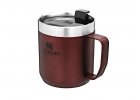
Coffee close to hand in the car, at work or by the water – travel mugs.
Regular hydration throughout the day – water bottles and Quencher H2.0.
Hot or cold food without another container – food jars.
Food, drinks and ice for several people – outdoor coolers.
Preparing and serving food outdoors – camp cookware.
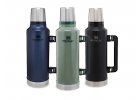
STANLEY vacuum bottles make sense when you need to carry a larger supply of hot or cold drink and plan to pour rather than sip continuously. Compare capacity, stopper and lid design, pouring method, weight and external dimensions. On selected models, the outer lid also serves as a cup. A larger vacuum bottle provides a greater supply, but once filled it may be less practical to carry on foot than a more compact version.
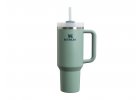
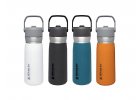
Travel mugs are designed primarily for more frequent drinking and quick access to the contents. Compared with a conventional vacuum bottle, they generally offer a smaller capacity and a lid designed for regular sipping. For everyday hydration, it is also worth comparing water bottles and the larger Quencher H2.0 models. A Quencher prioritises easy access and comfortable drinking throughout the day, while a securely closed bottle is usually more practical for a backpack, active movement and frequent changes of position.
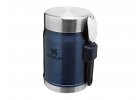
STANLEY food jars are designed for prepared lunches, soups and cold meals. Their wide opening makes filling, eating and cleaning easier and distinguishes them from drink bottles. For better thermal performance, the manufacturer recommends preheating or precooling the vacuum container before filling it. Add food that is already hot or cold: a food jar only maintains its temperature and does not replace cooking, reheating or safe refrigeration.
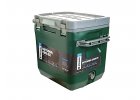
STANLEY outdoor coolers are intended for carrying larger quantities of food, cans and ice while travelling, fishing, camping or spending time on a boat. They are not electric refrigerators: their performance is also affected by the starting temperature of the contents, the amount of ice, how fully the cooler is packed, ambient temperature and how often the lid is opened. This section also includes Fast-Flow Water Jugs with dispensing taps. These are intended for cold drinks, not as vacuum-insulated stainless-steel flasks for hot contents or as a replacement for a cooler used to keep food separated.
If you need more than a container for maintaining temperature, continue to STANLEY camp cookware. When choosing cookware, consider the material, capacity, packed size, assembly and compatibility with the intended heat source. Products designed for carrying and serving other types of drinks can also be found in STANLEY barware. A similar capacity does not mean the same intended use – the construction of the exact product remains decisive.
For fishing trips, hunting and longer periods in the field, the Hunting & Fishing category provides a practical selection guide. It does not represent a separate insulation technology, but brings together products whose durability, usable capacity, stable handling and ease of cleaning make sense in these environments. A compact travel mug or bottle may be enough for a short trip, while a full day outdoors may call for a combination of a vacuum bottle, food jar and outdoor cooler.
You can also browse the range through the Adventure, Classic and Master collections. These do not form a simple ladder from entry-level to premium quality. Products carrying the same collection name may differ in capacity, construction and intended use, while some names continue older parts of the range. A collection name therefore never replaces checking the specifications of the exact model.
When comparing capacities, account for the actual weight once filled. One litre of drink adds approximately one kilogram, in addition to the weight of the container itself. With an outdoor cooler, you must also include ice, packaging and food. For use in a car, check the product’s height, base diameter and compatibility with the cup holder. For carrying in a backpack, secure closure and reasonable external dimensions are more important.
The lid type is just as important as the insulation. An open drinking port, rotating opening or straw makes frequent drinking easier, but may not be designed for placing a filled product freely inside a backpack. STANLEY distinguishes between leakproof, leak-resistant and splash-resistant constructions. Only regard a product as leakproof when the manufacturer explicitly states this for the exact model, and only when the lid is assembled correctly and completely closed.
For hot drinks, always check that both the container and its lid are intended for this use. A straw lid or permanently open flow system should not be used with hot contents unless the manufacturer expressly approves it. STANLEY also advises against placing carbonated drinks or dry ice in sealed vacuum products because pressure may build inside. Milk and dairy products should not be stored in vacuum bottles or food jars for extended periods.
Stated temperature-retention times are affected by the starting temperature of the contents, how fully the product is filled, ambient conditions and how often it is opened. The best results come from contents that are already hot or cold and a container that has been thermally prepared beforehand. A cold-retention figure stated “with ice” is not the same as performance with a cold drink alone, so figures for different construction types should not be compared directly.
After use, disassemble removable lid components according to the instructions for the exact model and clean the gasket, straw, threads and any areas where drink or food may remain. Allow every part to dry completely before reassembly. Check the individual product marking before using a dishwasher; for suitable models, the manufacturer recommends the top rack. Do not place STANLEY products in a microwave or freezer.
Frequently asked questions – choosing a STANLEY product
Which type of STANLEY product should I choose?
Begin with the contents and how the product will be used. Choose a vacuum bottle for longer temperature retention and controlled pouring, a travel mug, water bottle or Quencher for frequent drinking, a food jar for prepared meals and an outdoor cooler for larger quantities of food, drinks and ice.
What is the difference between a vacuum bottle, travel mug, water bottle and Quencher?
A vacuum bottle prioritises thermal performance and carrying a larger supply. A travel mug provides easier access to a smaller quantity. A water bottle is generally more practical for movement and transport, while a Quencher focuses on large capacity and comfortable drinking throughout the day. The exact use always depends on the lid fitted to the particular model.
Is every STANLEY product vacuum insulated?
No. Many drink and food containers use stainless-steel construction with vacuum insulation, while passive coolers and Fast-Flow Water Jugs use double-wall plastic construction with foam insulation. Camp cookware may not be insulated at all.
Is every STANLEY mug or Quencher leakproof?
No. Some lids are designed mainly for convenient drinking and to reduce accidental splashes rather than for being carried freely inside a backpack. Only regard a model as leakproof when this property is explicitly stated for that exact product.
How should I choose the right capacity?
Consider the length of the trip, whether you can refill the product and how it will be carried. A smaller container may be more practical for everyday use, while a larger capacity makes sense for longer journeys or several people. Always include the weight of the contents and, with an outdoor cooler, the space and weight required for ice.
Can I put a hot drink in every STANLEY product?
No. Only use hot contents in a container and lid for which the manufacturer expressly permits them. Models with straws or open-flow lids may be intended only for cold drinks.
How can I get the best thermal performance?
Add contents that are already hot or cold, thermally prepare vacuum containers before filling and avoid opening them unnecessarily. With an outdoor cooler, use sufficient ice or ice packs and keep it away from direct sunlight.
Can STANLEY products be washed in a dishwasher?
It depends on the exact model. Check the marking on the product or its instructions. When dishwasher cleaning is permitted, the manufacturer recommends the top rack; all other products should be washed by hand.
Which STANLEY product should I choose for fishing or a longer outdoor trip?
Use a vacuum bottle for hot drinks, a food jar for a prepared meal and an outdoor cooler for larger quantities of food and drinks. A practical selection of suitable products can be found in the Hunting & Fishing category.
→ Explore more brands and equipment for time outdoors in the complete Outdoor category.