
Costa Rica: Into the Pacific for Sailfish
Costa Rica did not start for us as a ready-made fishing holiday or a catalogue offer. It started in a very ordinary way – with one order for tropical fishing lures. And those are exactly the kind of orders you remember when you run a fishing shop in Central Europe. Norway, spinning, pilkers or halibut gear are part of our daily work, but tropical fishing still has a different flavour. There is distance in it, adventure, and water that an average Czech angler does not have in front of him every week.
About two years ago, Petr Vyvážil ordered several lures from us for warm-water fishing. I called him at the time because one item was missing from the order, and a normal customer call slowly turned into a conversation about Costa Rica. Petr told me that he was building a small resort on the Nicoya Peninsula, close to the Pacific. It was not finished yet. More of a project, a dream, a huge amount of work and energy. But it sounded interesting. Very interesting.
I told him one simple sentence back then: “When you have it finished, let me know. Maybe one day we can put some fishing together there.” You say a lot of sentences like that in life. Some disappear. Some never come back. This one did not disappear. Petr kept it in his head for two years.
At the beginning of 2026, he called again. Beach Resort Playa Leona was already operating and we started talking seriously. Not about the fact that there are nice fish photos somewhere on the internet. Not about adding another exotic offer to the website. We were talking about whether it was possible to build a real fishing trip in Costa Rica. One that we could stand behind with our own name.
And that is not something you can answer from a desk. You can look at maps, photos, videos, price lists and boats. You can speak to people on site. But until you get up before sunrise, step onto the boat and feel the Pacific under your feet, you still do not know enough. That is why we decided we had to go there personally. To test the journey, the base, the captains, the boats, the sea and the fishing itself.
From preparations in Czechia to the first morning in Playa Leona
Once it was clear that we were really going to Costa Rica, the gear preparation began. My job was to put together setups I would trust against a fish that can take tens of metres of line in just a few seconds behind the boat. Big game fishing is not a discipline where it makes sense to underestimate anything. Rod, reel, line, leader, hook and bait all have to work together. It is not only about brute strength. The setup must not be unnecessarily overpowered, the angler must stay in contact with the fish, and everything has to survive salt water, heat and a long fight.
In the end, we prepared several setups for heavier offshore fishing, along with stronger spinning rods for fishing around the gulf and for situations where active fish suddenly appear on the surface. Part of the gear was built around PENN, a brand we have long-term experience with. On paper, it made sense. But the real answer had to come from the Pacific.
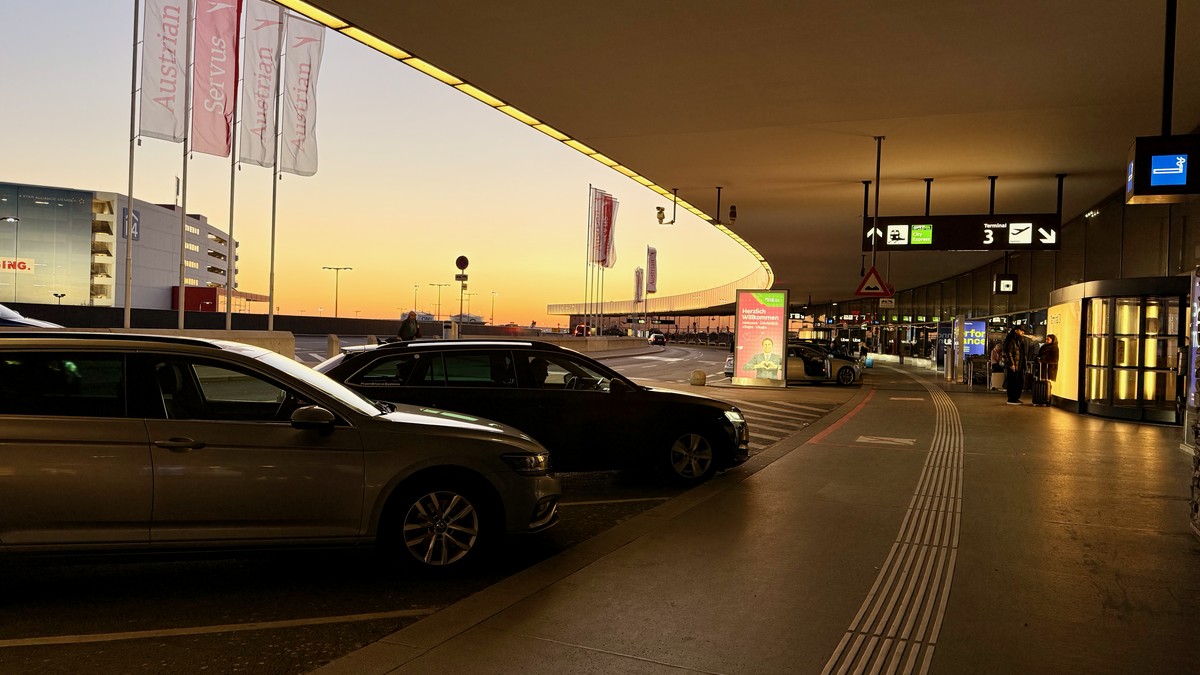
We eventually found flights from Vienna via Zurich to San José. It was not exactly a short trip, but after years of travelling to Norway, Greenland, Canada, Patagonia or Tierra del Fuego, I had some experience with long journeys. Still, I had mostly avoided the tropics. I was always more drawn to cold places, the North, rough weather and fish from cold water. Costa Rica was a different world for me.
The first impression after arrival was exactly that. Heat, humidity, different air, a different rhythm. We saw San José mostly in the dark, but already at the airport it was clear that we were far away from everything familiar. Your body suddenly switches from a Czech winter into the tropics and for a while it does not really understand what is being asked of it.
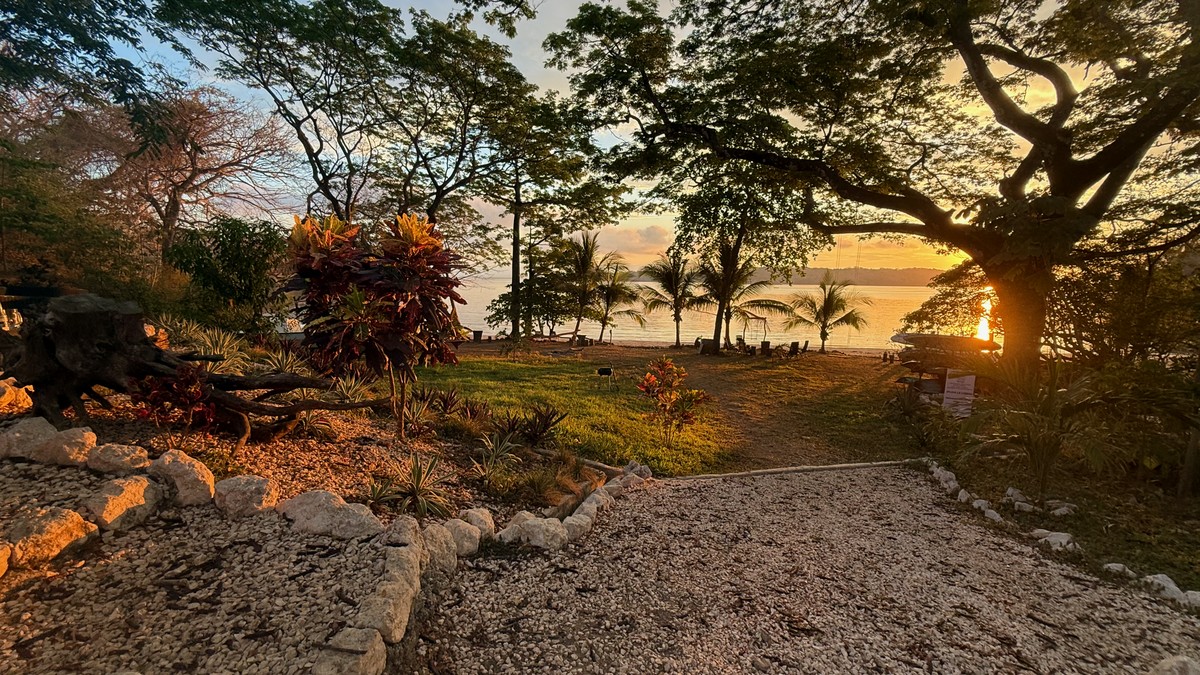
We arrived at the resort tired, but with that special feeling that the story had already started. I got a bungalow at the very end of the property. Number nine. At first, I took it simply as accommodation slightly aside from the rest, but over the following days I realised I had been given one of the best spots. Peace, space, and above all mornings that stay with you very deeply.
Sunrise in Costa Rica is not just the moment when the sun comes up. It is the moment when the whole land suddenly starts to sound. Monkeys, birds, insects, distant jungle noises, the first movement of air and light that changes everything around you within a few minutes. The temperature is still bearable and you feel as if you have experienced more life in one hour around daybreak than you normally would in a whole day. It is short. Almost too short. But that is exactly why it is so strong.
There was no time for a long adjustment period. Already on the second day after arrival, we had our first serious offshore trip ahead of us. We were leaving from Santa Teresa, more precisely from the small fishing area of Malpaís. The boat was supposed to be ready early in the morning, so we got up while it was still dark. The day before, we had assembled rods, checked leaders, lures, hooks and everything we had brought for the first run into the open Pacific.
The road to Malpaís and the first contact with the Pacific
Around half past four in the morning, we loaded the gear into the car and set off. Rods, bags, tubes, lures and that strange feeling when plans, meetings and talk at the table start turning into reality. There was fatigue in it, expectation and a bit of tension. In that moment you realise how much energy, time, money and decisions it took to be sitting in a car on the other side of the world, heading towards the ocean.
The road to Santa Teresa had its own charm. First darkness, then the first light, dusty roads, stretches of asphalt, morning traffic, people on motorbikes, children going to school, small roadside businesses and a quick stop for coffee. The land was slowly waking up, and with it our first fishing day.
As we got closer to the coast, we started catching the first glimpses of the Pacific between the palm trees. That is the moment when an angler automatically looks at the surface, even if he only sees it for a few seconds between the trees. The ocean looked good. Calm, without white caps, without a broken surface. Exactly what you want to see before your first trip for sailfish.
Beyond Santa Teresa, the road turned into a broken dusty track towards Malpaís. This was no polished tourist harbour with shiny boats. More like a small, tucked-away fishing corner at the end of the coast. Civilisation stays behind you, and in front of you there is the sea, rocks, dust, boats and wild Costa Rica. That was exactly its strength. It did not feel like scenery prepared for tourists. It felt like a place where people fish because that is how they had been fishing there long before we arrived.
In Malpaís, the local crew was waiting for us. The main man was Douglas, an experienced captain who had more people from his team with him. Petr quickly shook hands with him and we started unloading the car. Rods, bags, reels, lures, hooks, leaders. Suddenly there was a lot around us.
The boats in Malpaís were not sitting in a classic harbour on the water the way we know it from Norway. They were pulled up on the beach and launched over the sand with ropes and winches. That was one of the first major differences for me. In Norway, a harbour is something you almost take for granted. Here you quickly understand that the coastline, the tide and access to the sea set the rules of the game very differently.
We all shook hands. “Pura vida,” came from every side. That Costa Rican greeting cannot be translated only as a phrase. Literally, it means something like pure life, but once you are there, you quickly understand that it is more of an attitude. A greeting, a thank you, a mood and a piece of local character all in one. And from local people, it often does not sound learned. It sounds as if they really mean it.
There was not much talking. Partly because my Spanish is not exactly ready for deep discussions about the world’s oceans, but mainly because long speeches were not needed. Everyone knew why we were there. There was tension, but not fear. More like focus before the first serious offshore run.
Then the captain nodded. On the shore they released the rope, the boat slowly began to move and slid over the sand towards the water. The engine started, Douglas carefully added throttle and within a moment we turned the bow towards the Pacific.
The Costa Rican coastline opened up on both sides. Waves were breaking on the shore, a fine mist of sprayed water hung above the surface, with palms behind it, dry vegetation from the end of the dry season and hills further inland. It was not a polished holiday backdrop. It was raw, alive and genuinely strong.
I sat on the boat and, unusually for me, did not interfere with anything. After years of often being the captain in Norway, organising the crew, watching the weather, depths and the return route, I suddenly found myself in the role of an observer. I knew the pressure from the other side. A captain can be as good as he wants, but nature is not a supermarket. If the sea gives you nothing that day, you simply do not buy anything.
Douglas gradually added power and the boat began cutting through the calm surface away from the coast. There was silence on board. Only the engine, wind, water and expectation.
Dolphins, tuna and the first sailfish
The first offshore trip had a clear target. Sailfish, possibly marlin, tuna or dorado. In tropical waters, of course, you cannot arrive at a specific place and order a specific fish. But certain signs can be read. Birds, currents, water colour, surface activity and, above all, dolphins.
After several kilometres, the captain slowed down and started listening to the radio. The local boats communicated with each other and information moved fast across the sea. Somewhere further out, a pod of dolphins had appeared. That was an important message. Where there are dolphins, there is often bait. Sardines, smaller fish and predators around them. And where yellowfin tuna are holding, it is already worth looking for sailfish or marlin as well.
After some time, the first dolphins appeared under the boat. One, then another. That alone already felt like an experience. But it was only the beginning. We kept going and after several more tens of minutes, a huge pod appeared on the horizon. Hundreds of dolphins. They jumped, cut through the surface, disappeared under the boat and appeared around us again.
The sea was calm, so everything was visible. For someone from Central Europe, that image is almost hard to absorb. You are not standing in front of a screen. You are not in an aquarium. You are in the middle of a living ocean, inside a pod that moves by rules only it understands.
The first baits went behind the boat. The crew worked quickly and without unnecessary words. When trolling for sailfish and marlin, natural baits are used together with different teasers that splash on the surface and imitate fleeing baitfish. At first glance, it can look simple. In reality, there is a lot of experience behind it. Boat speed, bait distance, the way the baits work and the captain’s reaction to fish movement all have to come together.
And suddenly we were no longer just cruising across the Pacific. We were really fishing.
Dolphins were around us, under the boat and behind it. Somewhere below them there was bait, and with it the fish we had flown in for. Then, roughly three hundred metres away from us, yellowfin tuna started firing on the surface. Not one random jump. The water opened up and the fish charged through the bait at tremendous speed.
Douglas immediately turned the boat and we grabbed the heavier spinning setups with poppers. But chasing hunting tuna is not easy. They appear, vanish within seconds and show up again somewhere completely different. You cast into the place where the water was boiling a moment ago, and by the time the lure lands, the whole school is gone.
We could not quite get them on the cast, so we returned to trolling. And then came the first real hit. One of the rods bent over, the PENN multiplier drag started screaming and within a fraction of a second it was clear we had a fish. Tuna. But the first contact with the Pacific ended fast. The fish hit hard, immediately showed its power and broke us off completely.
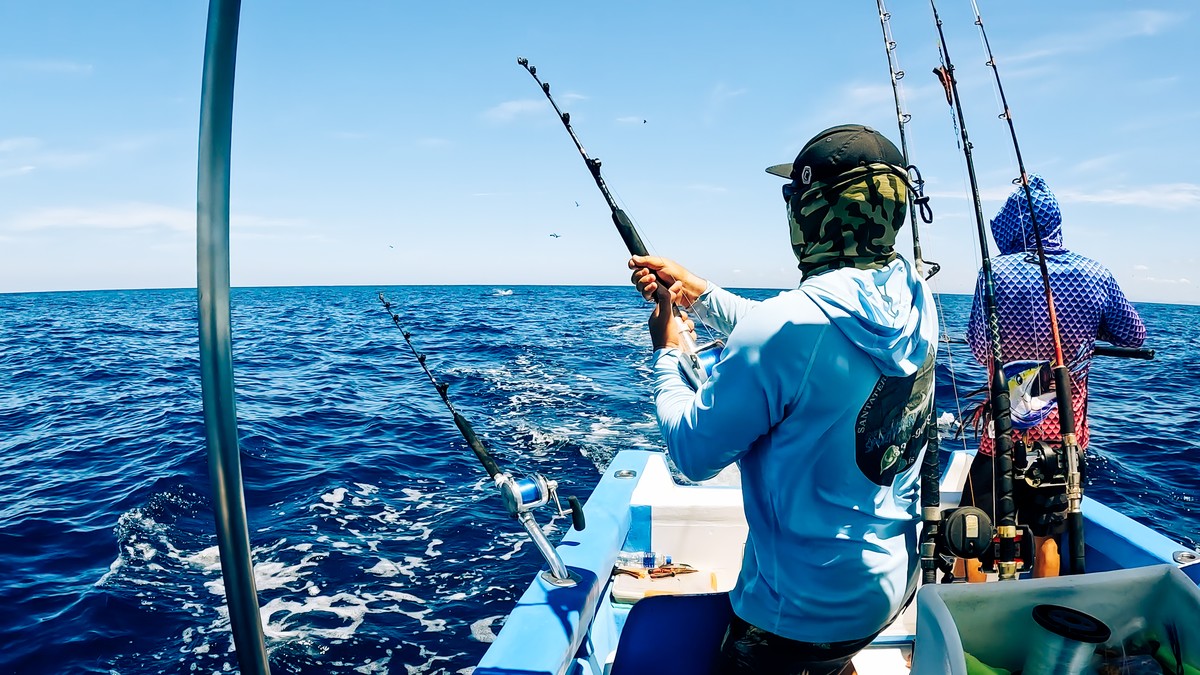
There was no time to think about it for long. The crew re-rigged and we kept going. It did not take long before another hard strike came. This time, a sailfish attacked one of the baits behind the boat. For a brief moment, the exact world we had flown here for opened in front of us. But it lasted only a few seconds. The fish shook the hook and was gone.
The first tuna broken off, the first sailfish lost. Two moments that you might analyse for half a day in regular fishing happened here within minutes. Right at the beginning, the Pacific showed us that we would not take anything just because we had flown in from Europe with good rods and high expectations.
But at the same time, it showed us something even more important. The fish were there. And we were in the game.
We continued after the dolphins. Costa Rica behind us grew smaller until only a thin line remained on the horizon. We were far from shore, truly out in the Pacific. The sea was calm and everyone on the boat was fully focused.
Then the drag sounded again.
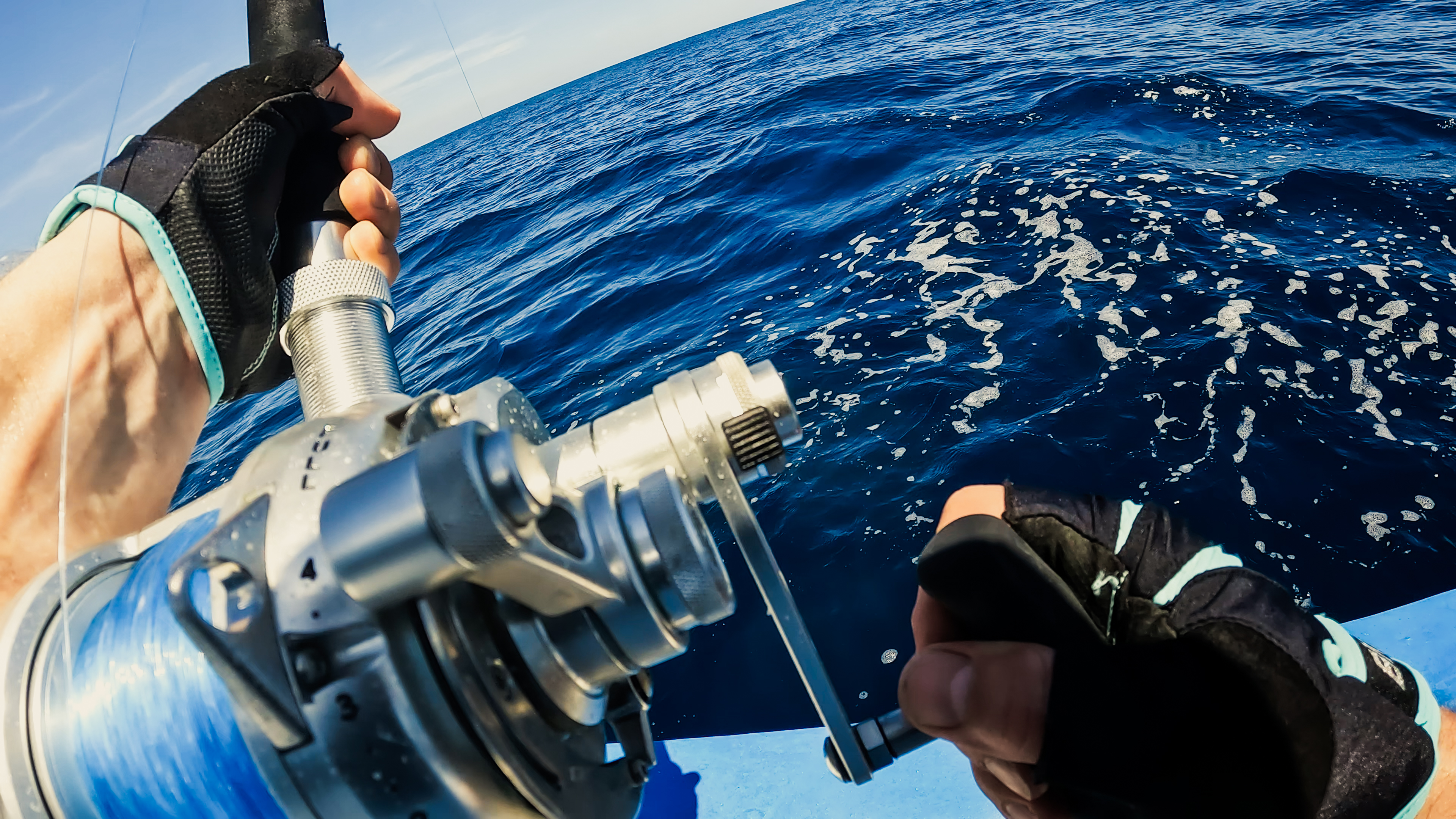
This time it was immediately clear that it was not a short contact. The fish was there. The bait was working behind the boat and in the same moment a sailfish rose from the water. What you know from videos, you suddenly see live. And only then do you understand that no video can fully explain that moment.
The sailfish bent in the air, opened its huge dorsal fin and for a few seconds it felt as if time had stopped. Not because the fish was moving slowly. Quite the opposite. Everything happens extremely fast. But when such a large, almost unreal-looking animal rises from the water, the human eye cannot process it in a normal way. That image burns into your head.
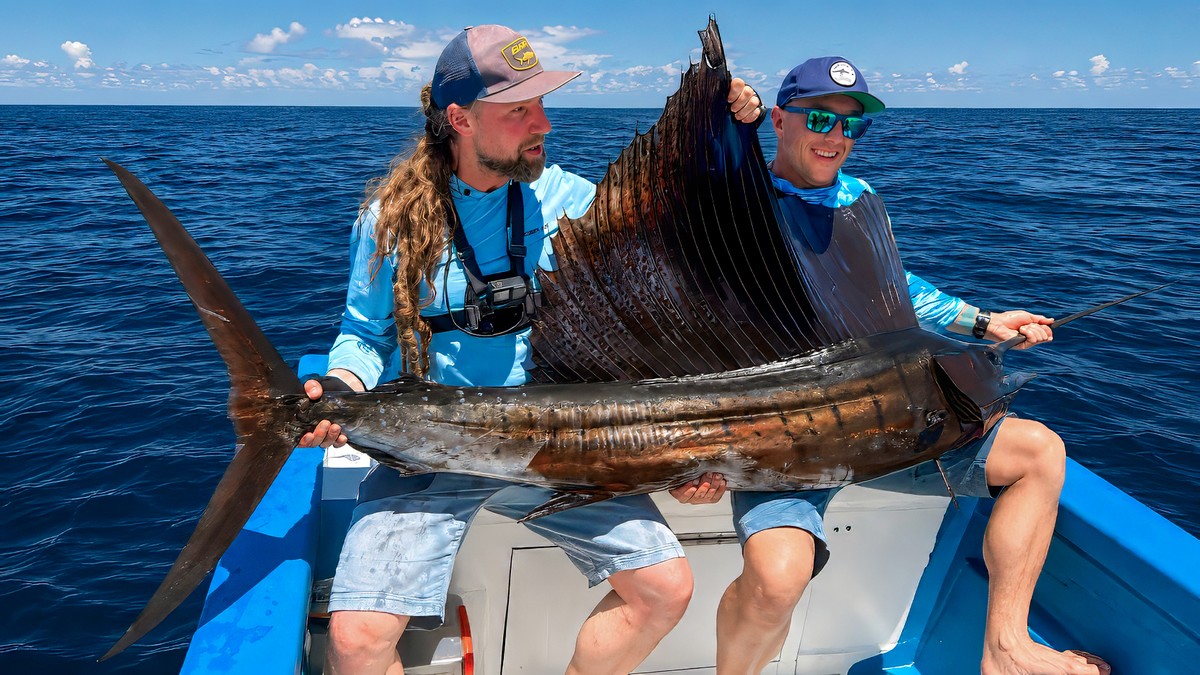
On the other end was a sailfish, estimated at around eighty kilos. There was no quick winching it to the boat. Here, you gain line by metres, sometimes by centimetres. The drag works, the rod folds into a deep bend, the fish runs, changes direction and you try to win back at least part of the line it has just taken.
The fight lasted roughly half an hour. Petr did a huge part of the work, but after several heavy runs it was clear he needed a short break. He handed the rod to me and I stepped into a fight I will remember for the rest of my life.
I managed to bring the sailfish close to the boat several times. And every time, for a few seconds, I thought we already had it. The fish appeared next to the boat, the crew got ready, and in your head you are thinking: one more metre, half a metre. But exactly at that moment another run came. The sailfish kicked, turned and took another twenty or thirty metres away from the boat.
This repeated several times. And the closer the fish was, the greater the nerves became. At long distance, the line has room to work, the rod absorbs the runs and the drag has time to respond. Next to the boat, everything is harder. Shorter distance, less room for error, boat movement and the last runs of the fish. I had only one thought in my head: do not break it off now, when we almost have it.
Fortunately, everything held. The drags were set well, the material worked, the rod did what it was supposed to do and the crew knew when to step in and when to give the fish a little more room. In the end, we managed to bring it to the boat together so the crew could secure it safely.
When we had the first photos and footage, a huge weight fell off us. It was not only about the fish itself. It was everything that had led to it. A phone call from two years ago, meetings in Czechia, gear preparation, the long journey, the first morning in Malpaís, the lost tuna, the lost sailfish and then finally the fish we had flown for.
That first sailfish completely drained us. Physically and mentally. This is not quiet fishing where you sit on a bank after a bite and wait for what happens next. This is extreme fishing in an extreme environment. Heat, salt, engine, water, nerves, speed and a fish that fights until the very end.
A day that does not come back
After the first sailfish, for a moment I felt like I never wanted to fish again. That it was enough. That I had just fulfilled something that empties you and fills you at the same time so much that you no longer have the capacity for another strike. But the sea around us kept going.
During the whole day on the open Pacific, we met only one other boat. One. After hours of fishing, dozens of kilometres from the coast, in an area full of life, dolphins, tuna, sailfish and turtles, we were almost alone out there. Costa Rica did not feel like a place where one charter boat follows another. More like a huge piece of Pacific that, for a while, we had almost to ourselves.
We continued around the dolphin activity, circling the pods and looking for the right track again. And then the drag sounded once more. A second sailfish.
At that point it almost felt unreal. There are fishing days you plan, and then there are days that simply happen. This was one of them. After the first fight, we were truly finished, so Petr’s friend Miguel took the rod. That allowed me to focus more on the camera and capture the second fight in a way that was impossible during the chaos of the first fish.
With the second fish, it was very clear how important careful handling is. A sailfish is a beautiful, strong, but sensitive fish. The local captains knew that. Everything happened quickly. Secure the fish, document it briefly and get it back as soon as possible. That is also why photos from this kind of fishing are not always perfectly polished. You are not in a studio. You are on a rocking boat, in the heat, after a hard fight, with the crew working around you and a live fish in front of you that has absolute priority.
Maybe that is why the material is a little raw in places. But that is exactly what makes it real. These are not catalogue photos from a staged trip. They are traces of a day that happened faster than we could fully understand.
The second sailfish was a confirmation for us. The first fish could have been luck. The second showed that we were in the right water, with the right crew and at the right time.
But the Pacific had one more scene ready for that day. Around the dolphins, yellowfin tuna started jumping again. A tuna does not appear by warning you in advance. You do not see it, you do not see it, you do not see it – and suddenly somewhere in the open water the surface explodes. The school shoots out of the water like lightning, fish flying in every direction, crossing, turning, moving in ways that are almost impossible to understand. They are hunting sardines and for a few seconds the whole ocean turns into movement that cannot be predicted.
We still tried to chase them with poppers, but we were already after two sailfish, after hours in the sun and after a full day on the open sea. We tried anyway. Because when fish like that are hunting around you, you simply cannot let it go.
We returned to Malpaís completely exhausted. The body hurt, the head was still running at full speed and you kept replaying the same images: the first lost tuna, the sailfish in the air, the fish next to the boat, the second fight, dolphins and yellowfin tuna firing through the surface. The tropical sun also reminded me very clearly that I was not born for equatorial noon. By the evening, my colour was something the locals of course did not leave without comment. I will keep the nickname for spoken stories only.
When we got back, we unloaded the boat almost automatically. Rods, bags, cameras, the remains of our energy. We said goodbye to Douglas and his crew no longer as complete strangers. In the morning we had shaken hands as new acquaintances. By the afternoon, there was a day behind us that turns people on a boat into a team.
Malpaís no longer felt like a place at the end of a broken road. It felt like a gateway to a story we would bring home. In the evening, we stayed around Santa Teresa. Surf community, dust, motorbikes, bars, beach, ocean and a strange mix of freedom that is hard to turn into words. After a day at sea, we had a beer, sat among people who had come there for the waves and let the day slowly fade out.
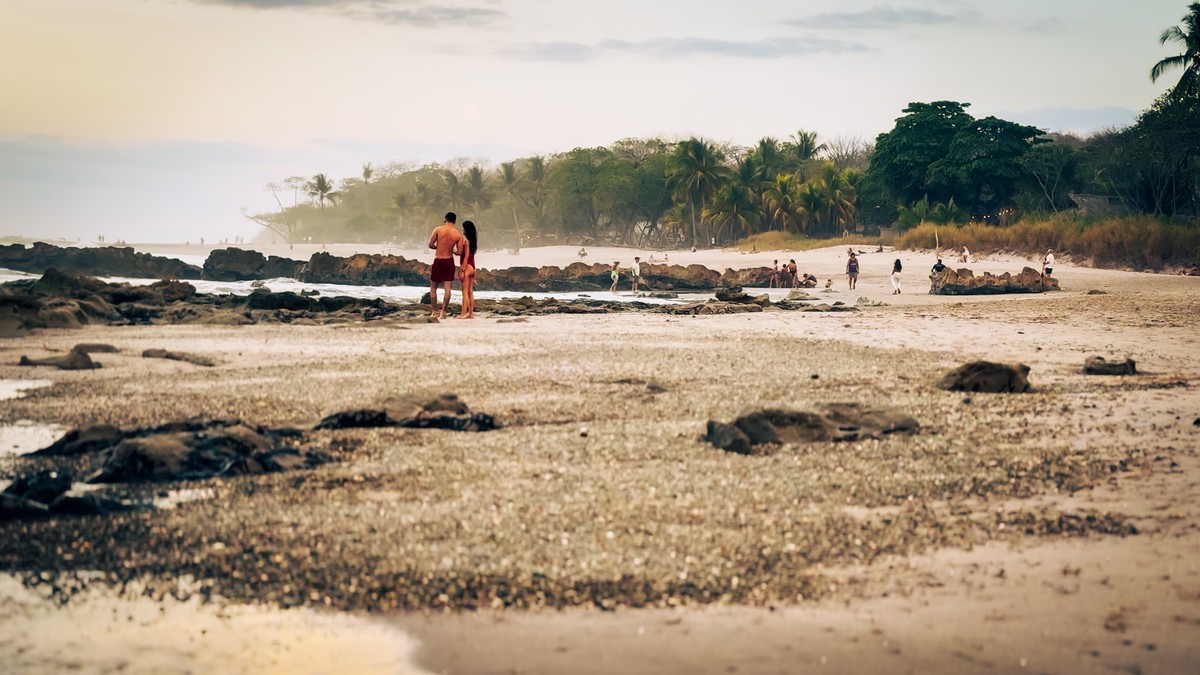
Not only a fish. Not only a photo with a sailfish. A whole day from darkness to night. The morning drive, first light, Captain Douglas, pura vida, dolphins, tuna, two sailfish, sunburned skin, dust and evening Costa Rica.
There are days you remember because something worked out. And then there are days you will return to in your head one day when you look back on your whole life.
This will be one of them.
Would you like to experience a fishing trip like this yourself?
We are gradually opening Costa Rica as a new SAF rybolov fishing destination – with verified local background, experienced captains, accommodation and the option of a tailor-made program for anglers and accompanying guests.