
Saltwater Hard Lures
Choose saltwater hard lures by the depth at which predators are feeding and the presentation you want to create. Lipped lures, stickbaits, poppers, walkers, jerkbaits and glidebaits offer different options for shore and boat fishing. Compare actual lure action, buoyancy and construction for your intended saltwater fishing.



Product sorting
Brands
List of products




Hard-lure types and the intended action
Saltwater hard lures let you search for predators on the surface and below it. Start with the position of the baitfish: over shallow ground, along a rocky shoreline, at a reef edge or in open water. The lure should reach the layer you need to fish and produce an action you can control consistently with your tackle.
Choose the lure type for the action you need. A diving lip, cupped face or lipless body affects presentation, but the product name alone is not enough. Compare actual movement, recommended retrieves and construction for your intended fishing.
Buoyancy, size and colour
Floating, sinking and suspending describe how a lure behaves when it stops. Floating lures rise, sinking lures descend, and suspending designs are intended to hold in the water column under specified conditions. A floating lure can still dive during the retrieve. Actual running depth also depends on retrieve speed, leader, current and rod position; trolling introduces line length as another variable.
Lipped lures – a diving lip creates action and depth; compare the intended running depth.
Stickbaits – lipless baitfish profiles for surface or subsurface work, depending on the design.
Poppers – a cupped face creates sound, bubbles and spray on the surface.
Walkers – surface lures for a side-to-side walk-the-dog retrieve.
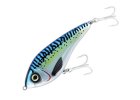
Jerkbaits and glidebaits – direction changes and sideways glides through sweeps or reeling.
Match lure size and weight to local baitfish, casting distance, the rod's rated casting range and the strength you need from the outfit. More weight does not automatically mean a deeper running lure. Choose hooks, rings and attachment points for the fish you intend to target. For powerful tropical predators, assess the specific lure construction rather than relying on the saltwater label alone.
A practical starting point for colour selection is to compare a natural baitfish pattern with a stronger contrasting option. Also consider silhouette and visibility in the available light. When fish follow without striking, first try a change in depth, speed or pause length. Colour is another presentation variable, not a guarantee of a strike.
Hard-lure saltwater fishing covers European coastlines as well as tropical destinations. In colder seas, it can suit predators feeding in the upper water column; deep vertical fishing calls for a different presentation. After fishing, rinse the lures in fresh water, allow them to dry and check hooks, rings and the leader for damage.
→ Browse other lure types in saltwater spinning lures.
→ For casting or trolling, compare lipped saltwater lures and each model's running depth.
Frequently asked questions (FAQ)
Which saltwater hard lure should I choose first?
Start by deciding whether you need a surface or subsurface presentation. Then compare retrieve style, running depth and a lure weight your outfit can handle.
Does floating mean a lure only works on the surface?
No. Floating describes buoyancy. A floating lipped lure or diving stickbait can run underwater during the retrieve and rise again on the pause.
What is the difference between buoyancy and running depth?
Buoyancy describes behaviour when the lure stops. Running depth describes the layer it fishes during the retrieve and also depends on speed, current and tackle.
Can every saltwater hard lure be trolled?
No. Check the intended use of the particular model, its stability at your trolling speed and the operating range specified by its manufacturer.
How do stickbaits, walkers and glidebaits differ?
Compare actual action. Surface walkers focus on a topwater zigzag, stickbaits offer lipless baitfish profiles, and glidebaits emphasise pronounced sideways glides. The names can overlap.
Does a saltwater label guarantee suitability for big fish?
No. The entire outfit needs suitable strength, including the lure body, attachment points, hooks and rings. Assess the construction and the size of fish you intend to target.