
Fishing Lead Molds
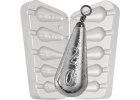
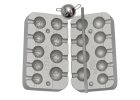
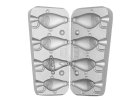
Fishing lead molds for casting your own weights and lures allow you to produce the right shape, weight and rigging design for different fishing methods. SAF offers aluminium molds for carp sinkers, feeder weights, jig heads, Cheburashka, pilkers, Fireball and Spin Jig – from light freshwater spinning to heavy saltwater setups. Choose the correct design, casting weight and compatible jig hooks, stainless steel loops, guide inserts and other components.



Product sorting
Brands
Cast Type
Casting Weight Range – All Molds
List of products





Fishing lead molds are the foundation of making your own sinkers, jig heads and metal fishing lures. They produce castings with a defined shape, weight and designated positions for the required components. The correct mold therefore determines much more than the number of grams of lead. It also defines the construction of the finished rig, the way a hook or leader is attached and the possibilities for completing the casting.
Do not choose a fishing lead mold by casting weight alone. First decide whether you want to produce a carp sinker, feeder weight, jig head for a soft plastic lure, articulated Cheburashka, pilker or another specialised metal lure. Then select the appropriate shape, attachment method and weight range. Finally, check all the required inserts and connecting components, without which the finished casting may not function correctly.
The SAF range includes molds for both freshwater and saltwater fishing. For carp and feeder fishing, there are conventional swivel and inline sinkers, Grippa, Horizon and pear designs, olives and feeder molds. Lure fishing is covered by jig heads, Cheburashka, Fireball and Spin Jig. Pilkers, heavy saltwater jigs and other sinkers for deeper water form a separate group.
Freshwater molds – Grippa, Horizon, olive and feeder designs; choose weight, body shape and swivel or inline construction.
Cheburashka and screw-in heads – articulated weights and spring-mounted heads; check clips, guides and springs.
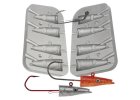
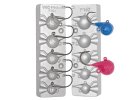
Jig head molds – round, fish-shaped, football and other profiles; verify the exact jig hook model and size.
Pilkers and saltwater weights – metal lures and heavy castings; check weight, attachment eyes and required inserts.
Fireball and magic balls – heads for vertical fishing and specialised rigs; hook compatibility and attachment design matter.
Spin Jig / tail spinner – rotating metal lures requiring the correct blade, swivel, hooks and attachment eyes.
Choose the finished casting weight according to the fishing method and actual conditions. Lighter weights are suitable for finesse spinning, shorter casts or shallower water. Stronger current, greater depth or boat drift may require significantly more weight. The aim is not automatically to use the heaviest casting, but to select a weight that allows you to maintain control of the lure or rig.
Mold shape influences weight distribution, centre of gravity, water resistance and bottom contact. A textured Grippa may help stabilise a carp sinker, elongated designs may suit different casting or current conditions, and different jig-head profiles change the arrangement of the front section of a soft plastic lure. However, no single shape is universally best for every situation.
With freshwater molds, it is important to distinguish between swivel-mounted and inline designs. A swivel or terminal sinker uses a separate attachment point, such as a metal eye or stainless steel loop. An inline sinker has an internal passage for the line or a matching insert. Both systems may use similar external shapes but require different components and rigging methods.
Feeder molds form another construction group. Some produce a separate lead weight that is subsequently attached to a metal or plastic feeder body. One example is SAF Method Series, where the cooled lead insert is secured inside a compatible plastic feeder frame. Do not confuse a lead casting mold with a conventional bait-loading mold used only to shape groundbait around a completed feeder.
With jig head molds, compatibility with the exact hook model is essential. A mold may be designed for a 60° or 90° jig hook, but eye angle alone does not establish a correct fit. Shank length, wire diameter, bend position and the actual dimensions and orientation of the eye also matter.
Jig hooks from different manufacturers or design series are not necessarily dimensionally identical, even when they carry the same numerical size. For example, a VMC 3/0 may not match the dimensions of a Gamakatsu or Eagle Claw 3/0. If the mold specifies a particular hook model, do not automatically replace it with another hook of the same size.
Cheburashka weights use a different principle from conventional jig heads. The weight is not permanently cast around a long jig hook. Instead, it forms a separate part of the rig that is connected to the hook through a clip or another articulated system. Screw-in heads, on the other hand, may use a spring secured directly inside the soft plastic lure. These two constructions are not interchangeable.
Fireball molds are intended for specialised weighted heads, often with a shorter jig hook and a different bait attachment method. The range also includes magic balls and other specialised spherical heads. When choosing a mold, consider not only its weight but also the specified hook model, stainless steel loop, attachment eye or other required components.
Spin Jig is a separate system for making compact metal spinning lures with a rotating blade. The mold produces the weighted body, but a functional lure is completed only after adding the appropriate swivel, blade, split rings and hooks. The suitability of these components must be checked for the specific model and finished casting weight.
For pilker molds and other saltwater weights, the attachment construction is just as important as mass. Some pilkers require separate metal eyes, while others use a continuous through-wire insert. Saltwater jig heads may require large, reinforced jig hooks, while terminal sinkers have different attachment requirements. These systems must not automatically be treated as interchangeable.
One mold may contain several cavities with different casting weights. Other models are designed for a single weight or for repeatedly producing several identical castings. When choosing a mold, check the number of cavities, individual weights, sprue arrangement and whether the cavities can be filled separately. The widest available weight range is not necessarily the most practical choice for your workshop.
With multi-cavity molds, component compatibility must be checked for each cavity where applicable. Some models allow the same hook or metal loop to be used across all weights. Others require different sizes depending on the finished casting dimensions. Compatibility confirmed for one cavity must not automatically be extended to the entire mold.
Essential casting components include stainless steel loops, attachment eyes, swivels, guide inserts, inline tubes, clips and jig hooks. These parts connect the finished casting to the fishing rig or lure. Similar-looking components are not necessarily identical in size or compatibility.
For many SAF molds, suitable accessories are listed directly in the Related products section. This makes it easier to find the correct jig hooks, loops, guides and other parts. Always check exact product designations, dimensions and package contents, as not every required component is automatically included with the mold.
Most specialised casting molds in the SAF range are made from aluminium. This material allows repeated casting and accurately defined cavities. However, casting quality also depends on mold cleanliness, metal preparation, working temperature, pouring technique and correct positioning of all inserted components.
The casting weights specified for fishing lead molds normally refer to lead, the material for which the mold was designed. If you use another manufacturer-approved low-melting metal or alloy with a different density, the finished casting weight and the behaviour of the material during casting may change. Never use an alternative metal without verifying compatibility with both the mold and melting equipment.
Before casting, place the specified hook, eye, guide or other insert into the mold without molten lead. Check its position and make sure both halves close completely. If the mold does not close correctly, never force it. Verify the component model and dimensions first.
After casting, allow the metal to cool sufficiently, trim the sprues and inspect the surface. With jig heads, check that the hook is securely anchored and its eye remains clear. With inline sinkers, the internal passage must remain unobstructed, while pilkers and other metal lures require securely anchored attachment points.
Finished castings can be coated with suitable powder paint or rubberised coating, depending on the product. Surface finishing allows you to customise the appearance of a sinker or lure, but it must not block an eye, internal passage or another functional component. Follow the application and curing procedures specified by the coating manufacturer.
Making your own fishing weights also involves choosing the appropriate melting pot, ladle, workshop tools, protective equipment and finishing accessories. Before purchasing a mold, we recommend planning the complete production process – from the compatible mold and metal inserts through casting to the final surface treatment.
Safety must always be the priority when working with molten lead. Cast in a workspace with effective ventilation and suitable extraction, using a stable, heat-resistant surface. Wear safety glasses, heat-resistant gloves, long protective clothing and closed footwear. The mold, lead, tools and all inserted components must be clean and completely dry before contact with molten metal.
Water or moisture contacting molten lead can cause violent splashing. Do not eat, drink or smoke while casting. Keep lead-working equipment separate from household and kitchen utensils, prevent lead dust from spreading outside the workshop and wash your hands thoroughly afterwards. Follow the instructions supplied with the mold, metal and melting equipment, as well as applicable local restrictions on lead fishing weights.
If you already know the fishing method, start with the corresponding subcategory. If you own a particular jig hook or metal component, choose a mold with verified compatibility. If you are setting up a workshop for the first time, decide which casting types and weights you need before selecting molds and the appropriate equipment.
Frequently asked questions – fishing lead molds
How do I choose the correct fishing lead mold?
Start with the fishing method and the type of casting you want to produce. Then choose the shape, weight range and number of cavities. Finally, verify compatible jig hooks, stainless steel loops, guide inserts, tubes or other required components.
Which types of fishing lead molds does SAF offer?
The range includes freshwater molds for carp sinkers and feeders, Cheburashka, jig heads, Fireball, Spin Jig, pilkers and other saltwater weights. Each group has its own construction and accessory requirements.
Which casting weight should I choose?
Consider depth, current, drift, casting distance and the intended presentation of the lure or rig. Also match the weight to the capacity of your fishing equipment.
What is the difference between a sinker mold and a jig head mold?
A jig head mold is a specialised type of lead casting mold. It normally produces a metal head around a compatible jig hook, while conventional sinker molds may use attachment eyes, loops or an internal line passage.
What is the difference between 60° and 90° jig head molds?
The difference relates to the orientation of the hook's front bend and eye. Eye angle alone does not guarantee compatibility. Shank length, wire diameter, bend geometry and eye position must also match.
Can I use hooks from different manufacturers in the same mold?
Only if the specific models and sizes are compatible. The same numerical hook size does not guarantee identical dimensions. Always verify the actual fit and complete mold closure.
What is the difference between a jig head and a Cheburashka?
With a conventional jig head, the hook is usually permanently cast into the metal body. A Cheburashka is a separate weight connected to the hook using a clip or another articulated system.
Can I cast several weights from one mold?
Yes, if the mold contains cavities for different weights. Some models produce only one casting weight. Always check the number of cavities and exact weights on the individual product page.
Are hooks, loops and other accessories included with the mold?
Not automatically. Package contents vary by product. Before ordering, check the specifications and matching accessories, which are often listed in the Related products section.
Can I use a metal other than lead?
Only if the alternative metal or alloy is compatible with the exact mold and melting equipment. Different material density may change the finished casting weight. Follow the manufacturer's instructions.
What equipment do I need to cast fishing weights?
You need a suitable mold, compatible metal and melting equipment, the required inserts, appropriate workshop tools and protective equipment. A suitable coating can be used for finishing.
Why should I test the mold before pouring lead?
A dry test allows you to check the position of the hook or insert and verify complete closure. An unsuitable component can damage the mold or produce a defective casting.
How can I cast fishing weights safely?
Work with effective ventilation and suitable extraction, wear protective equipment and keep molds and all components completely dry. Prevent water from contacting molten metal, maintain good hygiene when handling lead and follow the manufacturer's safety instructions.
→ Find melting pots, coatings, accessories and protective equipment in our Lead Casting category.
→ Choose fishing molds according to fishing method, shape, casting weight and verified compatibility of all inserted components.